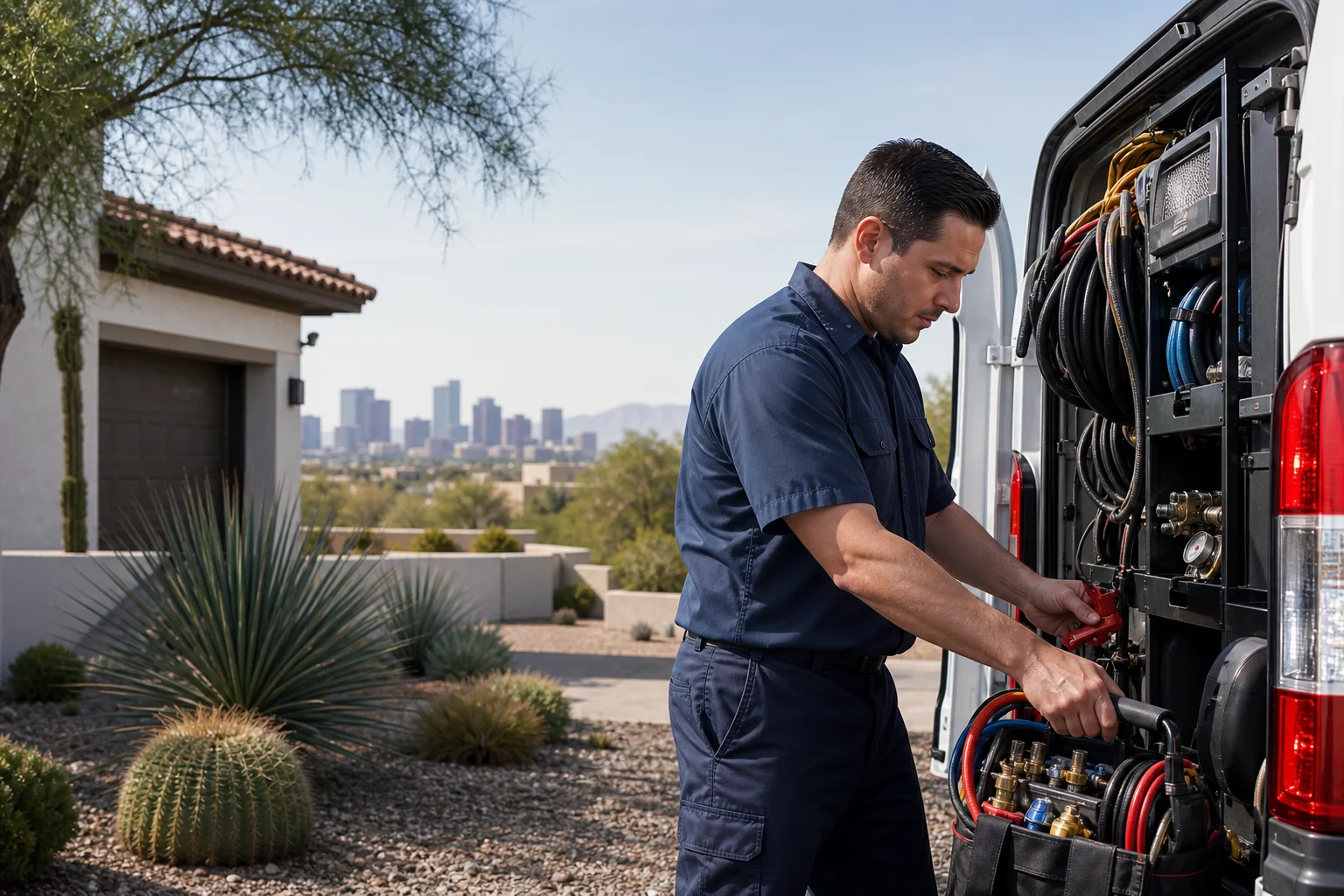
An AI operator builds a home services lead engine in 30 days by connecting local SEO services, automated follow-up, and smart scheduling into one system that works around the clock. If your HVAC, plumbing, or electrical company is sitting on a slow pipeline right now, here is exactly how that build works.
By Brotherly SEO Team
What an AI Operator Actually Does for Home Services Companies
Most owners hear "AI" and picture a chatbot. That is not what we are talking about. An AI operator is a layer of connected automation that handles the work no one has time for: monitoring your google business profile for new reviews, routing inbound leads to the right follow-up sequence, flagging jobs that got quoted but never booked, and reporting back to you in plain numbers every Monday.
For home service businesses, the lead problem is almost never a traffic problem. It is a response-speed and follow-up problem. Research published in Harvard Business Review by Oldroyd, Lee, and Staats (2011) found that companies responding to inbound leads within an hour are seven times more likely to qualify that lead than those who wait longer. Most home services operators do not have any process that makes one-hour response possible without automation.
Understanding how an AI operator builds a home services lead engine in 30 days starts with that premise: the leads are there, the follow-up is broken, and the fix is a system, not more staff.
Week One: Audit Your Lead Flow and Google Business Profile
Before anything gets built, you need a clear picture of where leads are entering and where they are dying.
Google Business Profile
Your google business listing is the first impression most local customers get. We check verification status, service category accuracy, phone number consistency, and photo freshness. We also review your response rate to questions and reviews, because an active google business profile earns higher map pack placement.
For home services operators, this is consistently the fastest win in the first 30 days. One of our HVAC clients moved from below the fold to the top three map pack positions in under three weeks from category corrections and photo additions alone.
Website Lead Capture
We review every page that could generate a lead: service pages, the contact form, and any chat widget in place. We check mobile load speed, form field count, and whether the call-to-action is specific or vague. Most home services websites lose leads on mobile because the form has too many steps or the phone number is not tappable.
CRM and Call Tracking
If you do not have a CRM, week one includes setting one up. If you do, we map how leads flow into it and find the gaps. We also configure call tracking numbers tied to each marketing channel so you know which source is actually driving calls right now.
Week Two: Build Organic and Paid Lead Channels
With the audit complete, week two is about building volume into the system.
Local SEO for Home Service Businesses
Local seo for home service businesses is not complicated, but it demands precision. We review your service pages and make sure each one targets a specific service in a specific market. A plumbing company serving three cities needs three sets of optimized pages, not one generic page that tries to do everything.
We also build out the citation profile. Consistent listings on Yelp, Angi, and the local Chamber of Commerce site act as trust signals that move local rankings. This is where home services marketing earns serious traction in competitive local markets. Strong citations combined with a clean google business profile create a compounding effect that organic search alone cannot replicate.
Paid Search to Fill the Immediate Pipeline
Organic search compounds over 60 to 90 days. Paid search fills the pipeline right now. We build campaigns around high-intent phrases: "emergency plumber near me," "AC repair [city]," and "same-day electrician." Bids stay tight to the actual service area, and a well-maintained negative keyword list kills irrelevant spend before it drains the budget.
For service businesses entering a new market or launching a new service line, paid lead generation is the fastest way to get real data on what customers in that area actually search for. That data then informs the organic SEO build.
Week Three: Automate Response and Scheduling
This is where most agencies stop, and where we keep going.
A lead who submits a form at 9 PM does not want to wait until 8 AM for a callback. The automation handles that gap. The moment a form submission lands in the CRM, an automated text goes out confirming the request was received and that someone will follow up first thing in the morning. That single touchpoint keeps the lead warm and cuts no-shows on the callback by a material margin.
For home service businesses, scheduling automation matters just as much as response speed. Connecting your CRM to your booking calendar means a customer can lock in an appointment window without talking to anyone. That cuts front-office call volume and lets your team focus on running jobs, not chasing confirmation calls.
Frequently Asked Questions Pages on Your Website
Building a frequently asked questions section on your service pages does two things at once. It reduces basic inbound calls, and it feeds the FAQ schema that Google pulls into search results. When someone searches "how much does a water heater replacement cost in [city]," your answer appearing in the results positions you as the informed local option before they ever visit the site.
We build these as part of the week three content push. Most operators have five to ten questions they answer on every single sales call. Those answers should already be on your website.
Week Four: The System That Keeps Your Home Services Lead Engine Running
The final week is about making the system self-correcting.
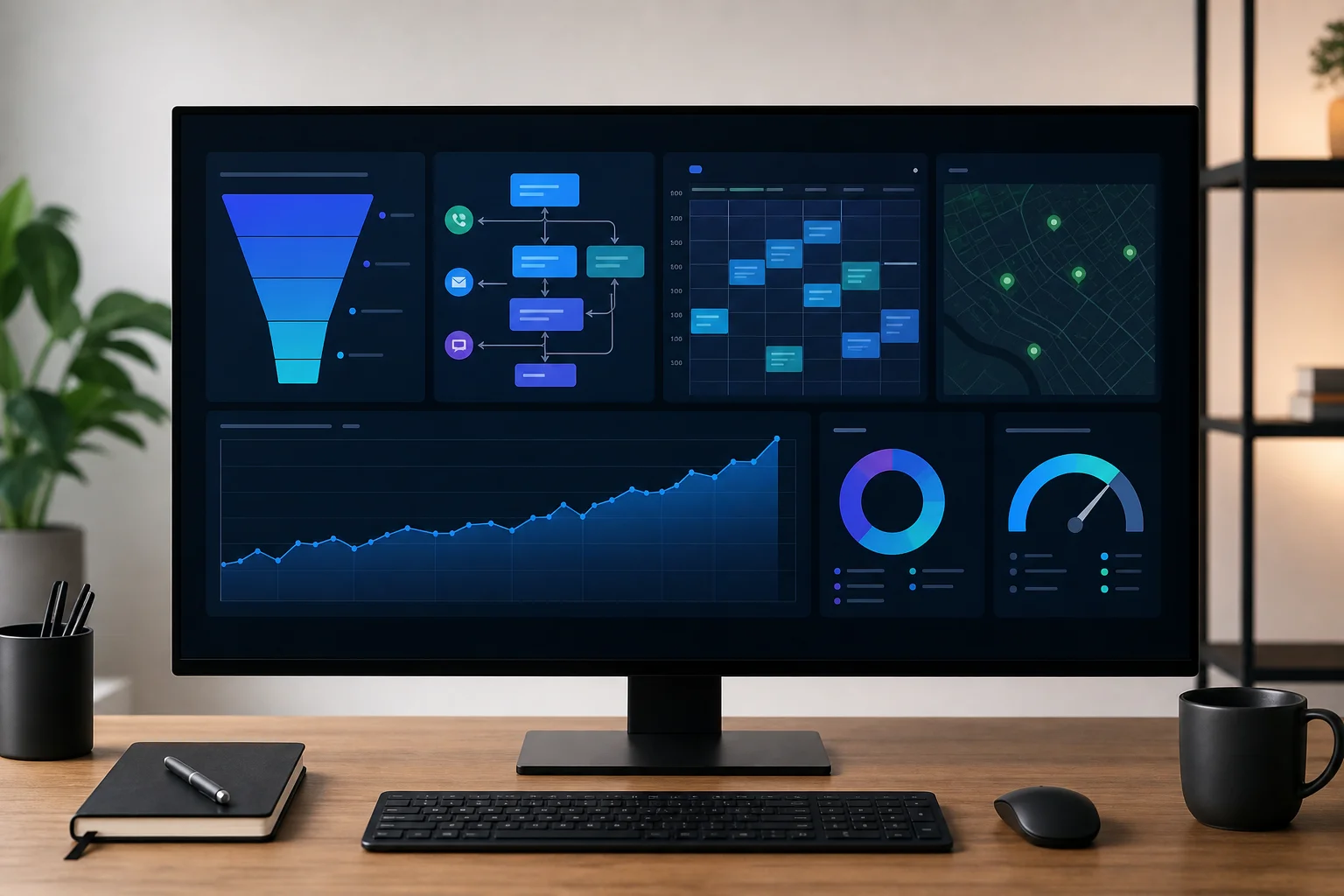
We set up a weekly reporting dashboard that pulls from your CRM, your google business profile, and your paid campaigns. Every Monday you see: leads received, leads contacted within the hour, jobs booked, and cost per lead by channel.
That data becomes the feedback loop. If paid search is driving leads at $40 each but organic is driving them at $9, we shift weight toward organic. If a service page is getting traffic but no calls, we fix the offer or the call-to-action.
This is how an AI operator builds a home services lead engine in 30 days without requiring you to dig through spreadsheets yourself. The system surfaces what is working and what needs adjustment automatically, so every conversation we have is about decisions, not data retrieval.
The weekly cadence also matters for service businesses operating in seasonal markets. A roofing company heading into storm season needs different visibility than an HVAC company heading into summer. The dashboard gives you that signal three to four weeks early so you can shift spend before demand peaks, not after.
Frequently Asked Questions
Does this work for small home services companies, not just large ones?
Yes. A two-person plumbing company and a 20-truck HVAC operation share the same core problem: leads that do not get followed up fast enough. We have built these systems for single-operator service businesses and for multi-location operators. The 30-day build timeline holds at both ends of the scale.
How much does a lead engine like this cost to operate?
The tools involved, including CRM, call tracking, scheduling software, and ad spend, vary by market and service volume. We do not publish fabricated price floors because the right setup depends on your specific situation. What we can tell you is that cost per booked lead drops once automation closes the follow-up gap, because you stop losing leads you already paid to generate.
What happens after 30 days?
The system compounds. Local SEO rankings keep climbing. Review volume builds. Paid campaigns get more efficient as conversion data accumulates. Month two and month three typically show stronger lead volume than month one because the organic layer starts adding to what paid already built in the first 30 days.
Do I need a large website to make this work?
No. A clean five-page website with properly optimized service pages consistently outperforms a bloated 50-page site. What matters is that each page targets one service, one market, and one clear intent. We handle that structure as part of the build so you do not need to figure out the technical requirements yourself.
Can you build this if I already have an agency or marketing setup in place?
Yes, and we do it regularly. We come in as the operator layer on top of what already exists. If you have a website but no automation, we build the automation. If you have automation but weak local seo, we strengthen the SEO. We work with what is in place and close the real gaps.
Start Generating Booked Jobs in the Next 30 Days
If you run a home services business and want a working lead system in place before your next busy season, we can build it. We handle the local SEO, the automation, the CRM setup, and the paid campaigns. You run your operation. Schedule a free consultation and we will walk you through exactly what the first 30 days looks like for your specific market.
Want us to do this for you?
Brotherly SEO builds and runs the strategy described here for service businesses across the country.
Book a free consultation