
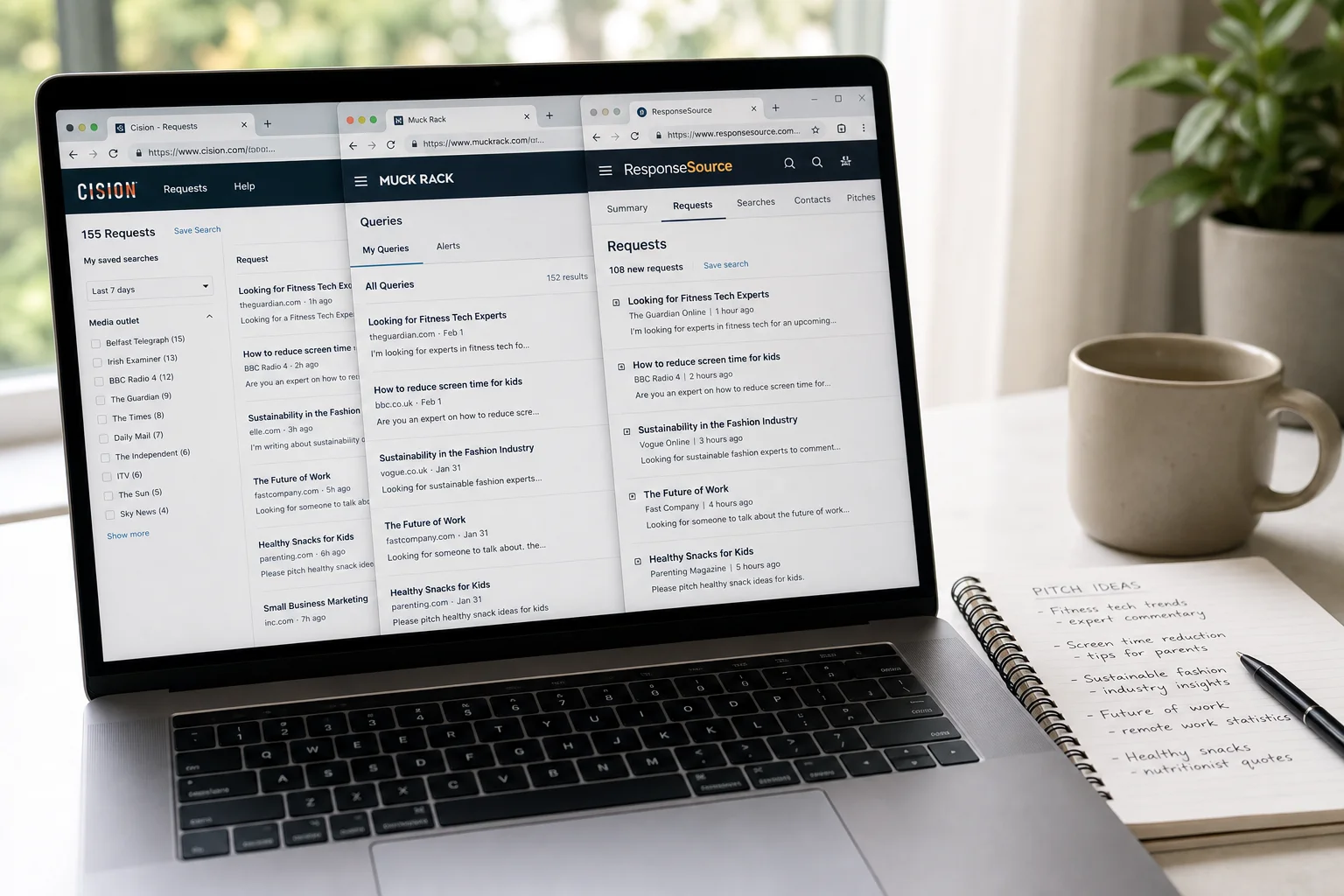
The digital pr stack that replaced haro in 2026 is built around three platforms: Connectively, Qwoted, and Featured.com. HARO's decline after the Cision acquisition left a real gap in media outreach, and these tools now fill it at different price points and for different use cases. If press coverage is part of your link building services strategy, this is what the landscape looks like now.
By Brotherly SEO Team
How HARO Collapsed and Why the Gap Still Matters
Help A Reporter Out launched in 2008 and ran as the dominant platform connecting journalists and sources for over a decade. The model was straightforward: journalists post queries, sources respond, and the best pitches earn a mention along with a backlink. At its peak, HARO was considered the best haro platform available for earned media, and PR professionals ran entire campaigns on it without using anything else.
Cision acquired HARO and rebranded it as Connectively in late 2023. The rebranding brought stricter rate limits, degraded query quality, and an influx of low-quality pitches that frustrated the journalists HARO had built its reputation on. The old help reporter pipeline weakened fast. By 2025, most experienced PR professionals had stopped treating it as a primary channel and started building multi-platform systems instead.
That shift is why the digital pr stack that replaced haro in 2026 looks the way it does. It is not one platform. It is a set of complementary tools that cover different parts of the journalist-source relationship.
The Three Platforms That Make Up the Best Stack
Connectively (The Direct Successor)
Connectively still processes journalist queries across multiple categories and still sends digest emails. The free plan limits you to three pitch responses per day, which is enough to evaluate fit but not enough for serious volume. Paid tiers start around $19 per month and raise those response limits. The platform's weakness is query volume: many categories that once generated 50 or more requests per week now see closer to 10 to 15. The queries that do come through tend to be from established publications, since casual contributors have moved to other platforms.
Qwoted
Qwoted positions itself as a journalist-first alternative and emphasizes verified journalist profiles with direct messaging between sources and reporters. That structure cuts down on the spam problem that plagued HARO near the end. The free plan is limited, and meaningful access starts around $49 per month for individual users. Qwoted also functions as a media database, making it useful for proactive media outreach rather than only reactive pitching to existing queries. PR professionals who run serious campaigns tend to treat Qwoted as their primary platform for journalist queries.
Featured.com
Featured (formerly Terkel) operates differently from the other two. Instead of responding to live journalist queries in real time, brands and experts build profiles and contribute answers that live in a searchable database. When a journalist from Forbes, Inc., or a similar publication needs expert commentary for a roundup or data story, they pull from that database. The free plan gives you limited profile visibility. Paid tiers start around $99 per month. The model rewards consistency: the more quality content you contribute, the more useful you become to journalists who pull from the platform regularly.
Why the Digital PR Stack That Replaced HARO in 2026 Matters for Rankings
The reason to care about any of this is what press coverage actually does in google search.
An editorial backlink from a real publication with real readership passes authority signals that paid placements and directory submissions cannot replicate. Google's quality guidelines have consistently treated earned links from editorially independent sources as higher quality than links acquired through schemes or paid placement. The March 2026 Core Update reinforced this further: author entity signals now play a more direct role in how Google evaluates content and the domains pointing to it.
Our SEO services treat digital PR as a complementary channel alongside technical optimization and content production. The practical reason: across multiple campaigns in competitive verticals, pages that accumulated 3 to 5 earned media links within a 90-day window consistently moved faster in rankings than comparable pages relying on content alone. Earned media links signal real business activity, which is exactly the kind of link profile Google is built to reward.
Those results are not guaranteed. They are a consistent pattern across multiple clients in home services, healthcare, and professional services, where editorial coverage is available and the operators are willing to be quoted.
Running Media Outreach Across Multiple Platforms
The platforms are infrastructure. Strategy is what determines whether the infrastructure produces results.
Effective pitching comes down to match quality. A home services company responding to a journalist asking about the future of enterprise software is a bad match. The same company responding to a journalist writing about how homeowners vet contractors in 2026 is a strong match. Specificity of fit drives accept rates far more than raw response volume.
PR professionals who actually produce consistent placements run a daily process: check journalist queries across multiple platforms in the morning, identify 2 to 3 high-fit opportunities, write tight pitches under 200 words that answer the journalist's question directly, and track response rates by publication type and beat. The cost is time. The return is a link profile that compounds over months without requiring ongoing spend.
Realistic expectations at the SMB level: 2 to 4 placements per month on mid-authority publications, and 1 to 2 per quarter on higher-authority domains. That output, sustained over 12 months, builds meaningful authority and reinforces the content investments that would otherwise take longer to pay off. Social signals and branded search volume also benefit from press coverage over that same timeline, adding lift beyond the direct ranking effect.
Who Gets Results from This Stack (and Who Does Not)
The digital pr stack that replaced haro in 2026 works best for businesses with genuine expertise to share. A financial advisory firm with a real track record, a healthcare practice with clinical depth, a contractor with documented project data: these are the sources journalists actually need. Pitches from sources like these land because the content is useful to the story.
It is less effective for businesses without a clear expert or operator willing to be quoted, or for brands that lack data, case studies, or a perspective a journalist can actually use. You can have access to every platform on this list and still produce zero placements if your pitches are generic. The platforms do not fix that problem.
Digital PR is also a slower channel than paid search. It is not available for a business that needs leads next week. It is available for a business that wants to build authority over 6 to 12 months while other channels carry short-term load.
Frequently Asked Questions
What platforms replaced HARO in 2026?
The primary haro alternatives in 2026 are Connectively (HARO's official rebranded successor), Qwoted, and Featured.com. Each fills a different function: Connectively and Qwoted run on live journalist queries you respond to in real time, while Featured.com operates as an expert database that journalists query when building roundup or data-driven stories. Most active digital PR programs use all three.
Does the free plan on these platforms actually produce results?
The free plan on Connectively and Featured.com gives you limited pitch responses per day, which is enough to test fit and learn query formats. For consistent monthly placements, paid tiers are typically necessary because free-plan response caps prevent the volume needed to produce results across multiple editorial targets in the same month.
How do press placements affect google search rankings?
Google search treats editorial backlinks from real publications as high-quality authority signals. A link from a publication with genuine readership and editorial standards passes weight that generic links do not. The March 2026 Core Update specifically reinforced author entity signals, meaning a source's credibility now plays a more direct role in how Google evaluates the surrounding content and its linking patterns.
What makes a good pitch to a help writer or journalist?
Effective pitches are short (under 200 words), answer the journalist's question directly in the first sentence, include a clear source credential, and avoid promotional language. A help writer needs a quote or data point that fits the story. Pitches that lead with a company description are skipped. Pitches that open with a direct, useful answer to the question get read and sometimes published.
How many placements per month should a small business expect?
A well-run digital PR program at the SMB level targeting mid-authority publications typically produces 2 to 4 placements per month. High-authority placements on major national publications come less frequently, often 1 to 2 per quarter. Actual volume depends on query fit, pitch quality, and how much genuine expertise the business can put forward, not just platform access.
Put Your Link Building and Digital PR in the Right Hands
Running a digital PR stack across multiple platforms is daily work: monitoring journalist queries, evaluating fit, writing pitches, and tracking placements. Most business owners do not have that time, and most generalist marketers do not have the media outreach background to produce consistent results. If press coverage is a gap in your current strategy, schedule a free consultation and we will walk you through what a full program would look like for your business.
Want us to do this for you?
Brotherly SEO builds and runs the strategy described here for service businesses across the country.
Book a free consultation