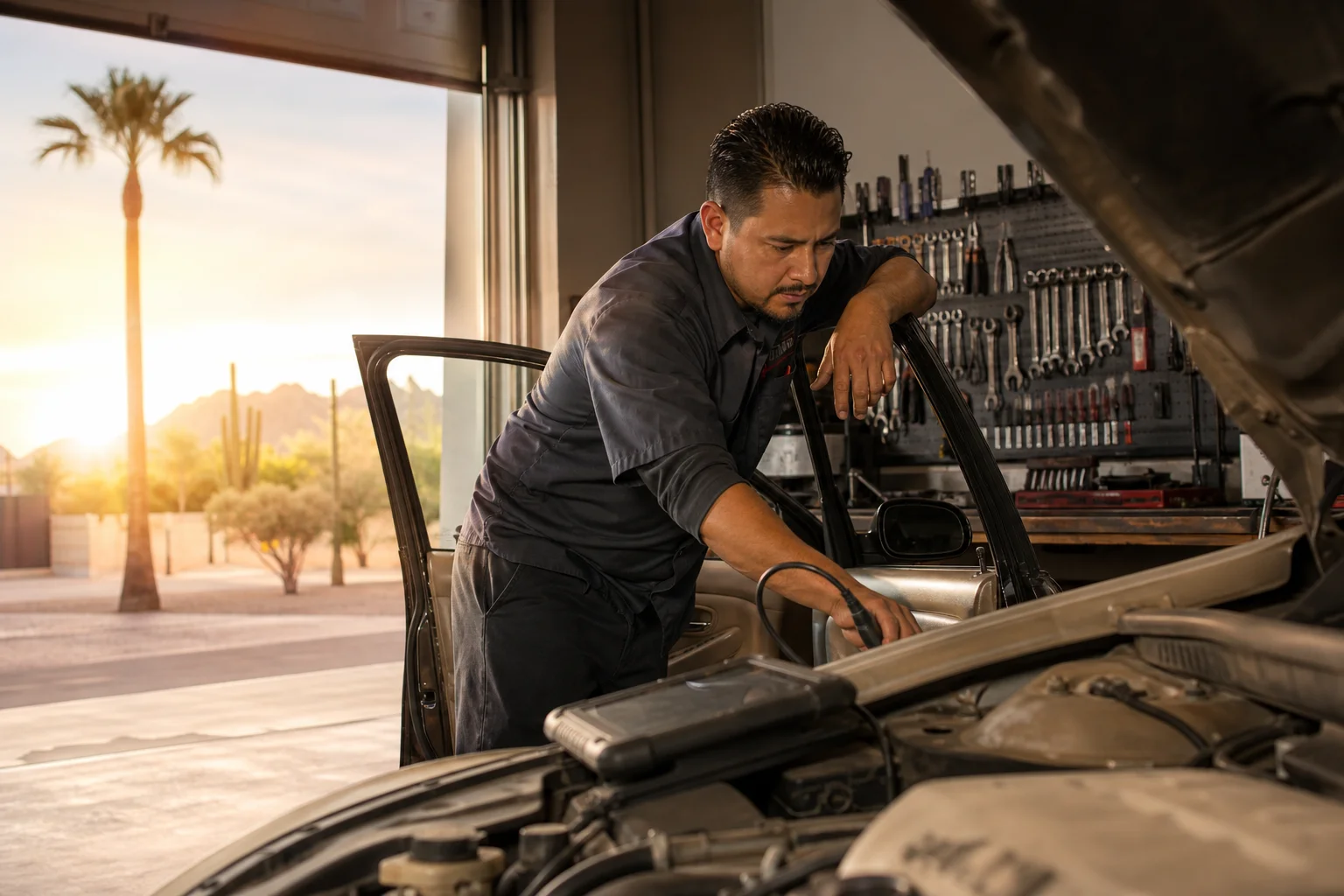
When a driver's check engine light comes on near the 101, the first move is a phone search, not a call to a shop they trust. Why your Tempe auto shop shows up for nobody when the check engine light comes on usually traces back to weak local search signals, and closing that gap is what auto repair marketing work fixes.
By Brotherly SEO Team
The Moment a Customer's Dashboard Lights Up
Picture the scenario. A driver leaves work Wednesday afternoon and the check engine light comes on before they even hit the on-ramp. Their first reaction isn't panic, it's curiosity. Is this serious, or is it a loose gas cap that will clear itself in a day or two? They pull over, double check the gas cap, tighten it, and keep driving. If the check engine light comes on again by Thursday morning, that's when the real search starts.
They type something like "check engine light near me Tempe" or "why is my check engine light on" into their phone before they ever think about calling a specific shop. Google reads that intent and tries to match it to a business with the strongest signals for that exact moment: local relevance, recent reviews, accurate hours, and a website that actually answers the question building in the driver's head. If your shop's Google Business Profile and site aren't built to answer that moment, you don't lose the customer to a competitor down the street. You lose them to whichever shop Google decided understood the question best.
What Actually Turns a Search Into a Booked Appointment
Most check engine lights trace back to a short list of usual suspects: a loose gas cap, a failing oxygen sensor, a clogged catalytic converter, or a mass airflow sensor sending bad data to the car computer. None of that is a secret, and any driver who searches long enough will find a dozen articles listing the same five causes. What those articles don't do is tell a Tempe driver which shop nearby can actually diagnose it today.
Not every one of those check engine lights means the car is falling apart. Most drivers don't know that the moment they watch the light turn on for the first time, which is exactly why the search that follows is so predictable. That's the real opportunity most auto repair websites waste. Ranking for generic explanations of what causes a check engine light brings in traffic that never converts, because it answers the question without ever pointing back to a local, bookable option. The shops that win the search aren't the ones explaining what an oxygen sensor does. They're the ones showing up right when a driver decides the issue is more serious than a gas cap and starts looking for someone to fix it, not just read about it.
Why Your Tempe Auto Shop Shows Up for Nobody When the Check Engine Light Comes On: A Local Search Breakdown
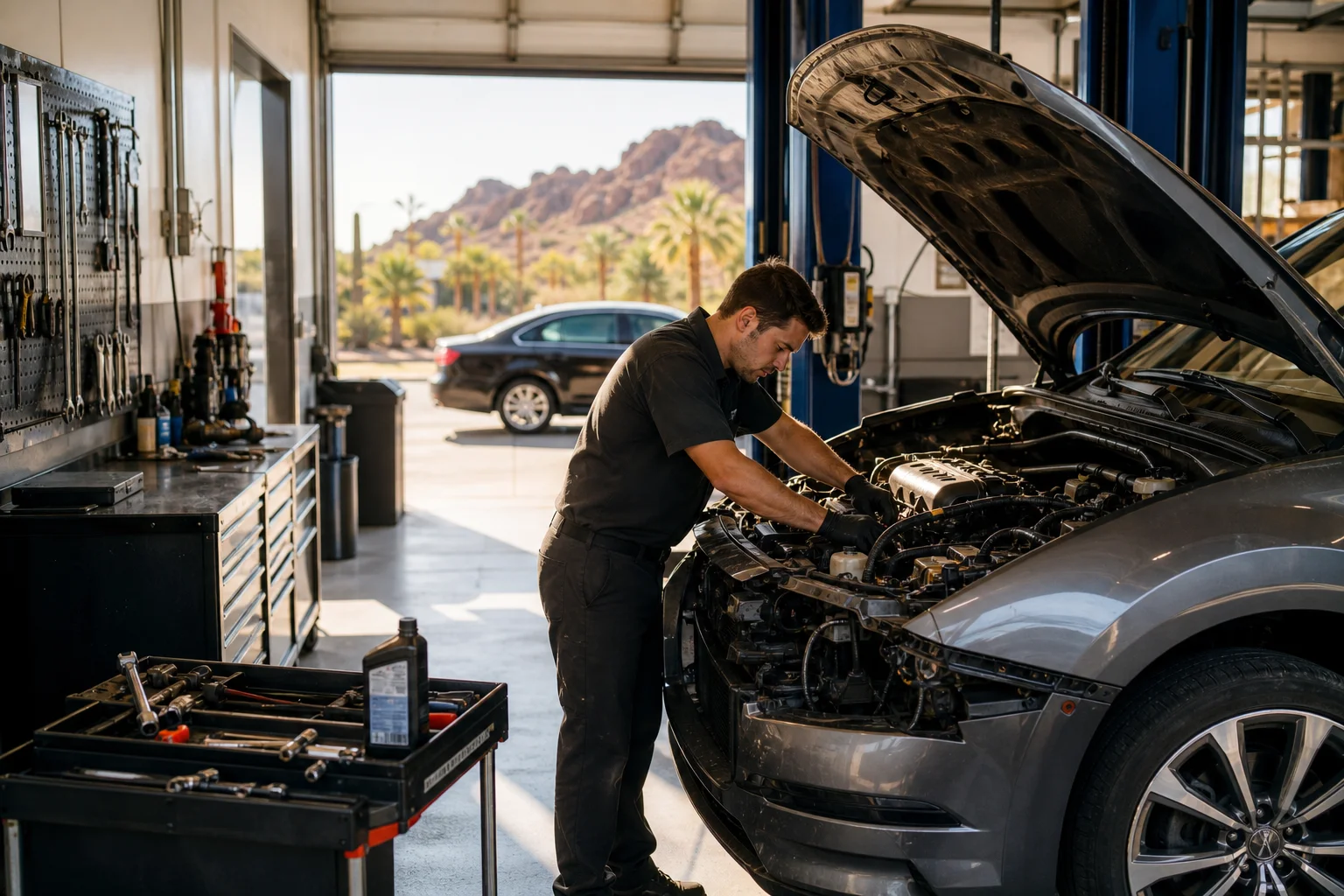
A shop can run a clean bay, stock the right auto parts, and still show up for nobody when the check engine light comes on and a driver starts searching. That's not a mechanic problem, it's a visibility problem. Three things usually cause it. The Google Business Profile is thin: missing categories, missing updated hours, missing the specific services a driver is trying to match. The website talks about the shop's history instead of the actual problem a driver has right now. And the content that exists was never built around how people search when something feels off with their car, whether that's a rattling exhaust or a light that just came on.
Fixing that is not a one-time task, it's an ongoing discipline, the same kind of work covered under our local SEO services. It means the shop's profile, site, and reviews are consistently reinforcing the same signal: this business, in this part of Tempe, handles this issue, today.
The Real Cost of Losing That First Search
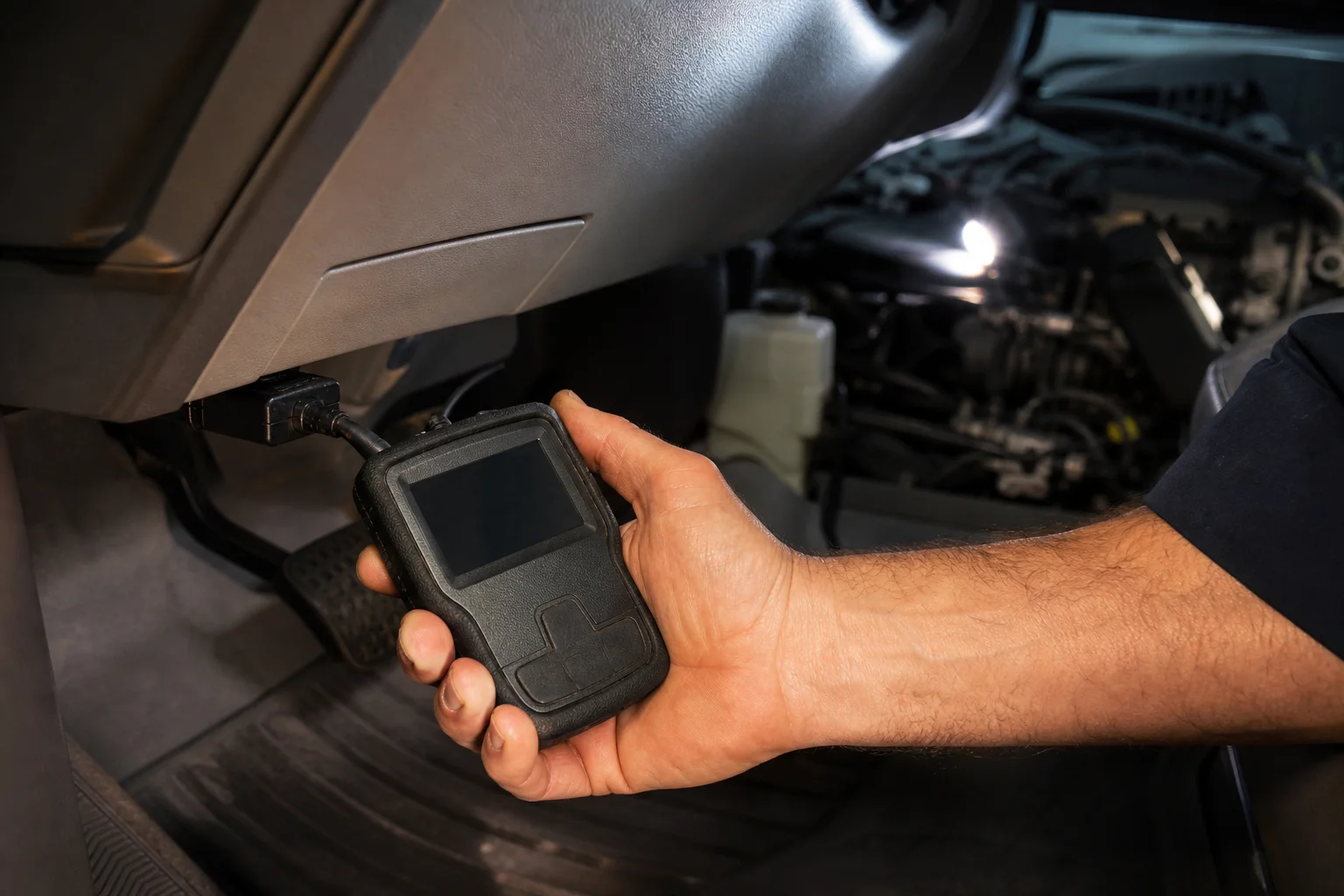
We saw this play out with a Phoenix-area auto repair client last March. Their light-diagnostic page barely got found, so most of that early-stage search traffic went to competitors with weaker mechanics but stronger local listings. Once their profile, reviews, and location pages were rebuilt around how drivers actually search, the same shop started showing up for the exact moment a driver's dashboard light came on, not just for people already looking for their brand name by name.
That's the pattern across almost every service business we work with: home services, healthcare, auto repair. The business with the best repair work doesn't automatically win the search. The business whose online presence is built around the customer's actual problem does. A driver who just noticed a red warning light on the dash isn't reading a blog about car maintenance history. They're trying to figure out if they can keep driving or if they need to get it checked today, and they want that answer from someone close to home. That single gap, the exact reason your Tempe auto shop shows up for nobody when the check engine light comes on, is what separates shops with a full bay from shops with an empty one.
What We Actually Do for Auto Repair Clients
We don't hand Tempe auto shops a checklist and wish them luck. Our process for auto repair clients starts with mapping every way a local driver might search when their check engine light comes on, then rebuilding the Google Business Profile, service pages, and location signals around those exact moments instead of generic brand terms. From there it's ongoing: watching which searches are converting, tightening the pages that aren't, and keeping the shop's presence current every month, not just at launch.
This isn't a one-and-done listing cleanup. It's the kind of structured local SEO services work that compounds over months, built around how drivers actually search when something on the dashboard lights up. Read enough reviews of shops that dominate their local map pack and you'll notice the same pattern: consistent activity, consistent signals, and a site built around the driver's actual problem instead of the shop's origin story.
Frequently Asked Questions
Why does my shop rank for our business name but not for repair searches? Brand-name searches are easy, the driver already knows you. Repair searches like "check engine light near me" reward different signals: complete service categories, recent reviews, location-specific content, and a Google Business Profile built around the actual problem, not just your shop name. Most shops rank fine for their own name and nowhere for the search that would bring in a new customer.
How long does it take to start showing up for check engine light searches? Local search improvements build over months, not days. Google needs time to trust new signals like recategorized listings, fresh reviews, and rebuilt service pages before it ranks a shop higher for competitive local searches. Most shops see meaningful movement within three to six months of consistent work, with the map pack usually shifting before organic rankings catch up.
Do I need a blog explaining car problems to rank better? Generic educational content about oxygen sensors or catalytic converters rarely moves the needle on its own. What matters more is content and profile signals tied to your specific location and services, built so Google connects your shop to the driver's real, local problem instead of ranking you alongside national auto information sites that never book an appointment.
What's the fastest way to lose a check engine light customer to a competitor? A thin or inconsistent Google Business Profile. Missing hours, outdated categories, or too few recent reviews push a shop below competitors in the map pack exactly when a driver is deciding who to call. That first search moment is usually decided in seconds, and profile gaps are the most common reason a qualified shop gets skipped.
Get Your Tempe Auto Shop Found Before the Next Check Engine Light Comes On
You already know how to fix the car. We handle making sure the next driver whose dashboard light comes on in Tempe finds your shop first, not a competitor with weaker mechanics and a stronger search presence. Start with a free SEO consultation.
Want us to do this for you?
Brotherly SEO builds and runs the strategy described here for service businesses across the country.
Book a free consultation