The google march core update finished rolling out in early April 2026 and hit thin content, weak author signals, and templated service pages hardest. If your search visibility dropped during those two weeks, this update is the likely cause. Here is what the march 2026 google core update actually changed. Our SEO services are built to hold through these cycles.
By Brotherly SEO Team
Why March Is When Google Moves
In the northern hemisphere, spring starts in March. National holidays, international awareness campaigns, and new-season demand all land in a compressed window across the United States. March birth months, weather volatility, and surging local search activity make this one of the highest-stakes periods for search visibility.
The month is named after Mars, the Roman god of war. Named Mars by ancient Romans, it carries a long history of disruption. The Ides of March marked political upheaval in the ancient world. Today, for site owners, this day March and the days around it often mark digital upheaval. The old saying applies: like lion like lamb. March starts loud and exits quietly. Like lion like lamb describes core updates too. The first half brings the volatility. The second half shows what settled.
In the march month of 2026, Google picked this season to drop one of its most consequential updates. Month year after year, the pattern repeats. The google march core update in 2024 cracked down on thin content. The 2025 march march cycle pushed E-E-A-T harder. The 2026 edition went further on both fronts.
What the March 2026 Core Update Actually Changed in Rankings
What the march 2026 google core update actually changed falls into three clear categories. Core updates are not penalty updates. They are recalibrations of how Google weighs quality signals across all search results. But recalibration is a mild word for what can be a sharp ranking swing inside days.
Topical depth over keyword repetition
Sites with content that touched many topics without depth dropped in the search results. Pages that mentioned a service category repeatedly without explaining the process, timeline, or real-world outcome were flagged. Google's systems are now better at identifying the gap between ranking for a term and genuinely answering the searcher.
Author and expertise signals
Every update google has released since March 2024 has weighted E-E-A-T more heavily. The march 2026 core update accelerated this. Sites without clear author attribution and no evidence that real practitioners wrote the content saw rankings slide. Content editors who had not addressed these gaps were exposed. Images, structured data, and schema held better when the content underneath was substantive.
Thin or templated content at scale
The updates google system has gotten sharper at distinguishing content written to rank from content written to genuinely help. Auto-generated category pages, templated service-area content with no market-to-market differentiation, and repurposed thin articles all took hits in the search results.
How Search Visibility Moved During the Rollout
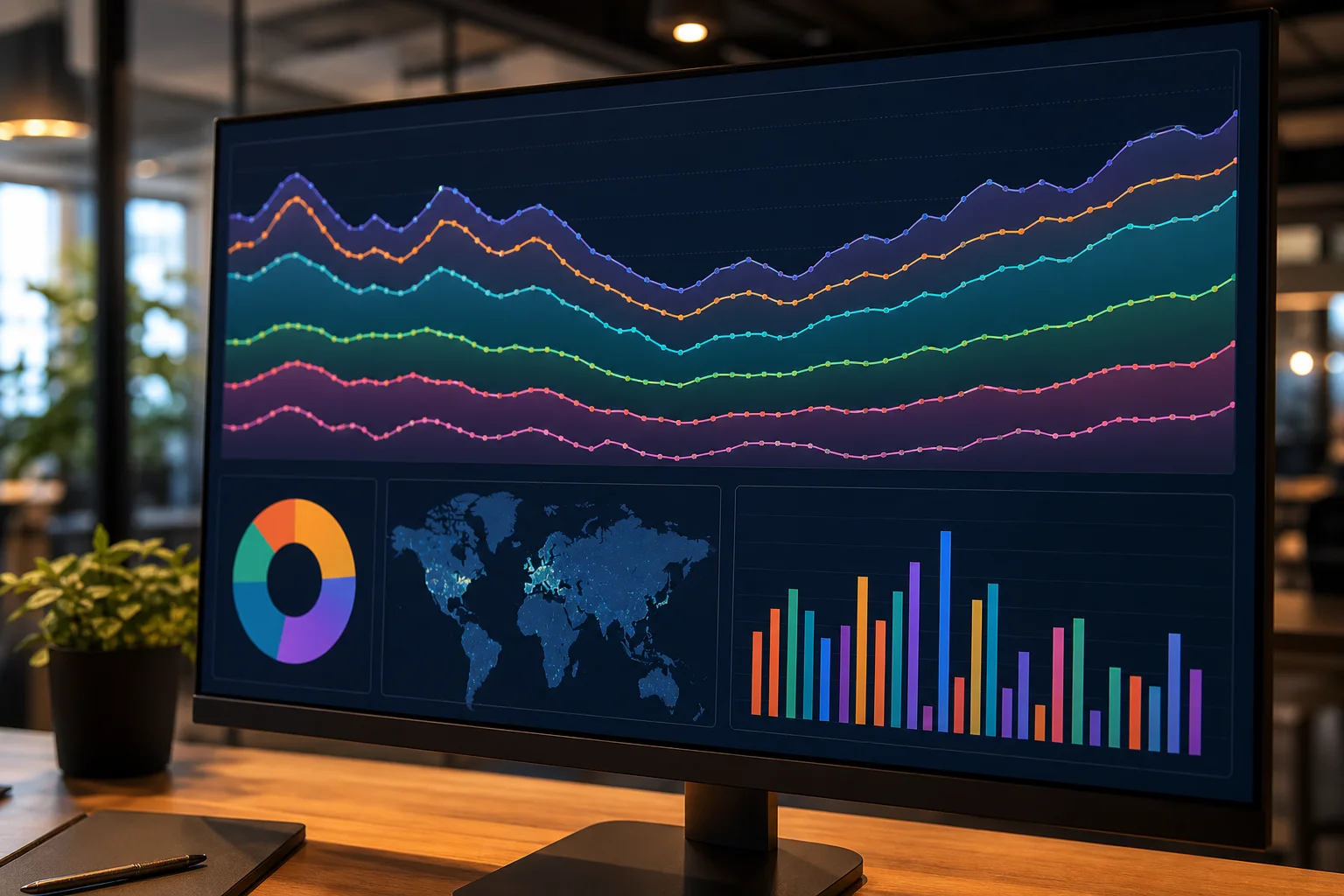
The two weeks of rollout created a wave pattern in analytics. Visibility did not drop all at once. Traffic moved in stages, consistent with what Google has described publicly about how core updates propagate.
Informational query traffic fell first, often in the opening days. Service pages held longer but softened around day 10. Sites with strong link profiles and clear topical authority recovered partially within 30 days of the update completing.
Sites with a coherent content strategy going into March held significantly better than sites publishing without a clear topical focus. The updates google deployed checked for coherence across a site, not just quality on individual pages. A site with 10 well-organized cluster pages held better than a site with 100 disjointed pages even when individual page quality was similar.
The recovery window after core updates historically runs 3 to 6 months. Sites that make meaningful content improvements after a core update typically see the benefit at the next core update cycle, not immediately.
What We Saw Across Client Accounts
We manage search for businesses across a wide range of industries in the United States. The pattern after the google march core update was consistent.
Clients with a defined content strategy, organized topic clusters, and strong on-page signals held or gained. Clients who had built volume over quality dropped, sometimes sharply in the first 10 days.
One of our home services clients saw a significant drop in non-branded impressions early in the rollout. After auditing their content, we found over a dozen thin informational pages covering overlapping topics with no real differentiation. After consolidating those pages and expanding the highest-traffic ones, impressions recovered past the pre-update baseline within six weeks.
A roofing client in the southwest held its top positions through the entire rollout. Their site had clean topic clusters, active link building, and clear author signals on every page. The facts are straightforward: the signals Google was looking for were already in place before the update arrived. You can see how this plays out across the industries we serve.
What Your Content Strategy Needs to Look Like Now
Depth and specificity outperform volume and repetition. That does not mean longer pages for the sake of word count. It means answering questions more completely than your competitors and giving Google a reason to surface your page.
Consolidate before you create
Pages built to capture keyword variations but offering the same information are now a liability. Consolidate them into a single authoritative page, or expand each with genuinely differentiated content. Do not add more thin content on top of an existing thin content problem.
Add real author signals
Every piece of content needs a clear author and a byline tied to relevant experience. Google's systems can now detect generic, authorless content at scale. This is not optional after the march core update.
Own a topic, not just keywords
The sites that held through this core update covered a topic from every relevant angle. The days of targeting isolated keywords without a surrounding content architecture are over. Topical authority is now the competitive moat.
Our link building practice is built around earning authoritative signals that hold through core update cycles, not the kind that spike and disappear.
Frequently Asked Questions
Did the March 2026 core update specifically target AI-generated content?
Google has not confirmed an AI-content filter in this update. What the march core update targeted was low-quality content regardless of how it was produced. AI-generated content that is thin, generic, and undifferentiated from what already exists in the search results is vulnerable. Well-edited, author-attributed, and genuinely useful content was not the primary target.
How long does recovery from a core update typically take?
Recovery from core updates takes months, not days. The history of core updates shows that sites making meaningful quality improvements generally see the benefit at the next major update cycle, which Google runs roughly every 3 to 6 months. There is no fast-track. Google has documented this pattern publicly and it holds across update cycles.
What industries were hit hardest by the March 2026 update?
Health, legal, finance, and home services saw the largest swings based on what we observed and what the broader search community documented. Google applies stricter quality standards to these verticals. If your site is in one of these categories and search visibility dropped in March or April, a content quality issue is the most likely explanation.
Will publishing more content help me recover?
Publishing more content will not help if content quality was the original problem. Producing additional thin pages after a core update can worsen your situation. Fix and consolidate what already exists before adding more. Volume is not the signal Google is looking for after this update.
How do I confirm the March 2026 update affected my site specifically?
Open Google Search Console and filter performance data for March 13 through April 5, 2026. A sustained drop in impressions or clicks starting in that window, without a quick recovery, points to the march core update as the cause. A short dip that bounces back within a few days is typically not related to core updates.
Get a Clear Answer About What Happened to Your Rankings
If you are still not clear on what the march 2026 google core update actually changed for your domain specifically, that is where we start. We look at your actual data, identify the content and authority gaps that cost you rankings, and build a plan around what we find. Start the conversation at our free consultation page.
Want us to do this for you?
Brotherly SEO builds and runs the strategy described here for service businesses across the country.
Book a free consultation