Google's AI Mode changed click-through rates for every business ranking in search results, and the brands catching up first are the ones growing. The old formula where a position-one ranking meant reliable traffic is no longer the math that works. Our SEO services at Brotherly SEO are calibrated to this new reality.
By Brotherly SEO Team
What Google AI Mode Does to the Search Engine Results Page
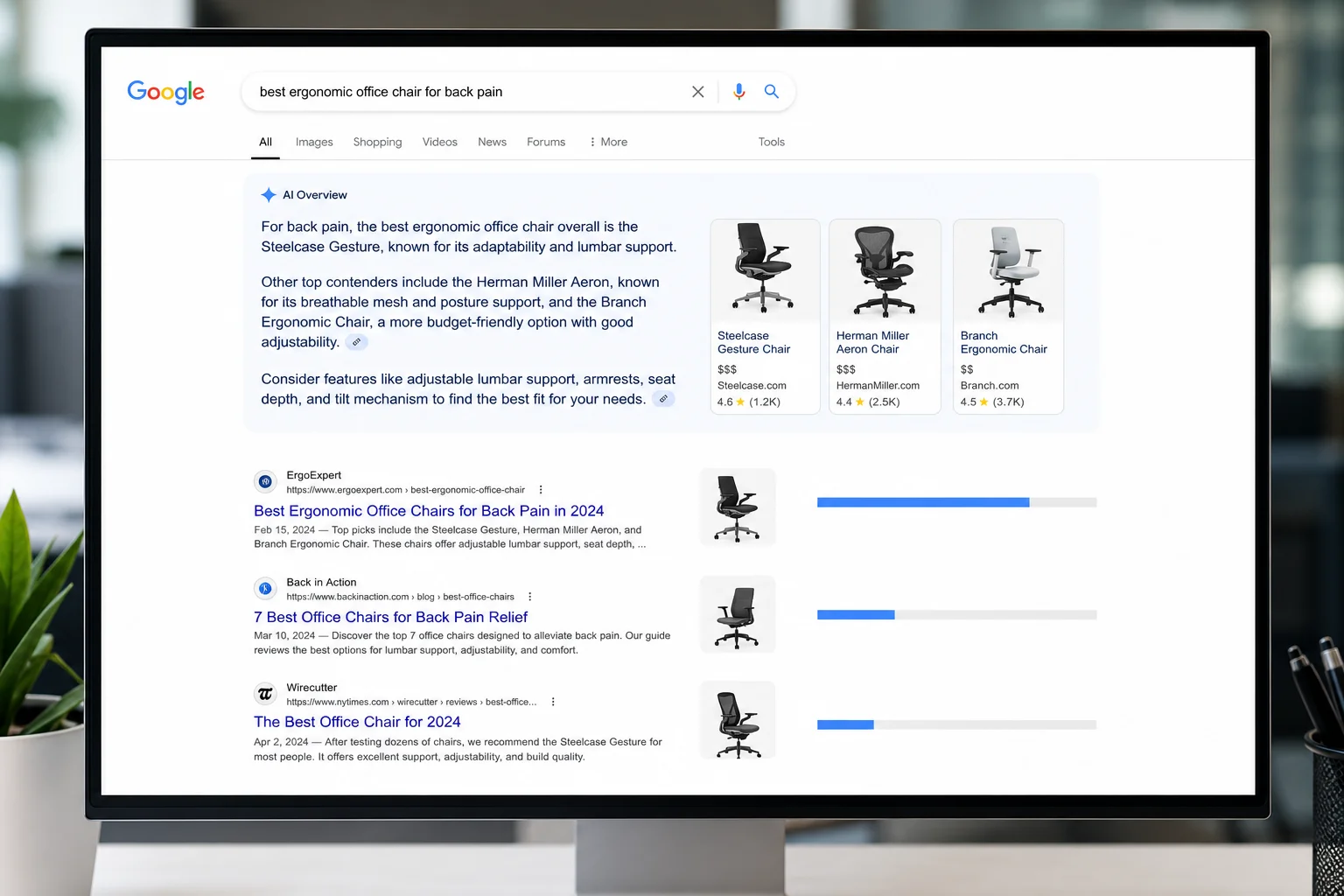
Google AI Mode, displayed as AI Overviews, now appears at the top of the google search results page before a single organic listing. When a user types a question into the search engine, Google generates a synthesized answer pulled from multiple web sources. That answer is the first thing users see, and many of them stop there.
The behavioral data backs this up. Research published by Semrush in 2024 documented an average organic CTR drop of 20 to 30 percent on informational queries when AI Overviews are present. For certain question-style queries, independent data shared through Search Engine Land shows drops exceeding 40 percent. The user gets the information they wanted. Your site gets skipped.
This changes the fundamental unit of value in organic search. For years, a high ranking in search results was a direct proxy for traffic. That link is broken on informational queries. The browsing experience has shifted: users can now explore a topic, check core facts, and learn what they need without ever clicking through to the original source.
The click still exists. It now requires a different reason to happen.
Why the Old CTR Benchmarks No Longer Hold
The research that shaped how agencies set expectations came primarily from Backlinko's 2019 study and Advanced Web Ranking data. Position one captured roughly 28 to 31 percent of clicks. Position two around 15 percent. Everything below position five was often called the dead zone.
That benchmarking data is now outdated for a significant share of google search volume.
Advanced search data from 2024 and 2025 shows a clear segmentation forming. On queries where AI Overviews appear, position-one CTR commonly falls to 15 to 18 percent. On queries without AI Overviews, traditional CTR patterns hold more closely. The challenge for businesses is that the queries most affected are the informational terms their blog content has always targeted.
If your content marketing strategy was built around capturing top-of-funnel organic traffic through informational posts, that funnel is contracting. The advanced search data does not show the channel dying. It shows the channel specializing. Informational intent is increasingly served by google ai. Commercial and local intent still routes through organic clicks and map pack results.
The businesses that learn to read this segmentation are the ones who can allocate content resources to where clicks still flow.
Where Clicks Still Flow After AI Overviews
Not every query in google search triggers an AI Overview. Understanding which query types still behave the traditional way helps businesses prioritize their organic investment.
Local queries with geographic intent continue to produce strong click activity. A roofing company in Kansas City or a dental practice in Scottsdale that ranks in the top three of the Google map pack still earns substantial clicks. Users looking for local service providers need to call, get directions, or check hours. No AI Overview completes that action.
Commercial queries with clear buying intent still drive clicks. Terms like "pool service Phoenix quote" or "pest control near me" still route users to organic results because the user wants to take a real-world step. Google AI can answer how often you should service your pool, but it cannot hire a pool company on your behalf.
Branded navigational queries still send users directly to the right site. When someone already knows your business name and types it into the search engine, the click goes to you regardless of AI Overviews.
Video content queries also drive direct clicks because AI Overviews cannot replace the experience of watching a YouTube video or exploring an image gallery. Visual-format content retains its click gravity in ways that text-based informational content has lost.
The common thread: clicks survive where the user needs to do something, not just know something.
How Google's AI Mode Changed Click-Through Rates Across the Full Funnel
The original lead funnel looked like this: informational content brought in top-of-funnel traffic, that traffic moved through trust-building content, and commercial pages converted. CTR at each stage tracked to ranking position in a predictable way.
Now the top layer of that funnel, the informational traffic, is being intercepted by AI Overviews before users reach any organic result. That compresses the number of users entering the trust-building phase through organic channels. The funnel does not disappear. The entry point narrows.
What works now is a two-track approach. Track one: build original, well-structured content that earns AI Overview citations. When Google's AI generates an answer and cites your site, users see your brand name. That builds brand recall and drives branded search over time, even without a direct click. Track two: optimize commercial and local pages to capture the clicks that still happen. These pages need clear conversion paths, fast load times, and specific geographic or service signals.
Our generative engine optimization work with clients focuses on both tracks. We build structured, authoritative content that gets cited in AI answers. We also sharpen the commercial and local pages that still earn direct clicks. The strategy accounts for the full funnel, not just the part that used to work.
What the New CTR Data Tells Us About Building Visibility
The most common reaction we see from business owners is a desire to pull back from SEO entirely. That reaction is understandable, but it misreads what the data actually shows.
The advanced search data does not show that organic search has stopped working. It shows the channel has split into two lanes: one where AI Overviews intercept informational intent, and one where commercial and local intent still routes through organic results. Walking away from SEO because the informational lane has thinned means abandoning the commercial and local lane that still converts.
Our Google Ads management clients see this clearly. When informational organic CTR contracted on some verticals, paid search filled the gap for high-intent commercial terms. An advertising business search strategy that combines organic authority, local visibility, and targeted paid placement gives full-funnel coverage even as the search engine continues to shift.
The tools and features built into Google's advertising business search platform also give paid search more precision than it had five years ago. Combined with a strong organic foundation, this approach creates a visibility system that does not collapse when google ai changes how information queries resolve.
Check where your organic sessions are actually coming from. If your top organic traffic sources are informational queries, you need to rebalance toward commercial pages. If you are already strong on commercial queries and local pack results, your position is more defensible than the headlines suggest.
Frequently Asked Questions
Does Google AI Mode affect every type of search query equally?
No. Informational and question-based queries trigger AI Overviews most often, which reduces organic CTR on those terms. Transactional, local, and navigational queries are less affected. Service businesses with strong local profiles and conversion-oriented commercial pages tend to see less disruption than sites built primarily around informational blog content for lead generation.
Should I stop publishing blog content if AI Overviews are reducing my clicks?
No. Original, well-structured content that earns AI Overview citations builds brand authority and increases branded search over time. The goal shifts from expecting a direct click on every article to earning citations for awareness and directing commercial pages toward conversion clicks. Both content types serve the funnel, just at different stages.
How do I measure performance now that old CTR benchmarks are outdated?
Track qualified traffic and conversion activity rather than raw CTR. A position-one ranking that generates fewer clicks but better-qualified users (because AI Overviews filtered out informational-only browsers) can outperform the old benchmark in actual business outcomes. Use Google Search Console data segmented by query type to identify where your traffic gaps are actually concentrated.
Can paid search replace the organic CTR that AI Overviews took?
Partially. Paid search covers high-intent commercial terms where AI Overviews have less impact. It does not replicate the brand trust signals that original organic content builds over time. The strongest advertising business search strategy pairs organic authority content for brand recognition with paid coverage for immediate conversion traffic on high-intent commercial queries.
What does it mean to be cited in an AI Overview?
An AI Overview citation means Google's AI included your page as a source when generating a synthesized answer. Your site appears as a reference link in the AI Overview block. Users who see your brand cited across multiple queries are more likely to search for you directly later, creating a branded search channel that compounds as your citation authority grows over time.
Let's Build the Visibility Strategy Your Business Actually Needs
Google's AI Mode changed click-through rates for every business, and the agencies still running 2019 playbooks are failing their clients. If you want an honest look at where your organic visibility stands and what a modern strategy looks like for your specific market, start with a free consultation.
Want us to do this for you?
Brotherly SEO builds and runs the strategy described here for service businesses across the country.
Book a free consultation