
Schema.org for AI search is now one of the fastest paths to citations in Google's AI Overviews and Bing's Copilot answers. For Arizona service businesses, five specific schema types are pulling the most weight right now, and our SEO services team has the markup data to prove it.
By Brotherly SEO Team
Why Schema.org for AI Search Is a Different Game Than Traditional SEO
For years, schema markup was treated as a nice-to-have. You would add it to a site, run the Google Rich Results Test, see the green checkmarks, and move on. Rich snippets in traditional search results were the prize: star ratings, FAQ dropdowns, breadcrumbs under your listing. Valuable, but not transformative.
AI search changed the equation. When Google launched AI Overviews and Bing Copilot became mainstream, both systems needed a way to pull accurate, verifiable facts from web pages at scale. Schema markup became the primary mechanism. It is a vocabulary built on Schema.org that labels the meaning of content on a page, not just the words themselves.
Today, when an AI Overview names a Phoenix HVAC company as offering 24-hour emergency service, it likely pulled that fact from a LocalBusiness or Service schema type on that company's site. If your web pages lack that markup, AI systems have to infer facts from unstructured text, which means lower confidence, fewer citations, and less visibility in the answers your potential customers are already reading.
The Five Schema Types Driving Arizona Service Citations
These are the five schema types we consistently see driving AI search citations and rich results for local service businesses in Arizona.
LocalBusiness and Its Subtypes
LocalBusiness is the foundation every other schema type builds on. It tells search engines your name, address, phone number, hours, and service area. For most of our clients, we use a specific subtype such as Plumber, HVACBusiness, HomeAndConstructionBusiness, or MedicalBusiness because subtypes give AI systems more precise signals about what you actually do.
The fields that matter most for AI citations: name, address, telephone, openingHoursSpecification, areaServed, and sameAs. The sameAs property links your schema entity to your Google Business Profile, Yelp listing, and social profiles. That cross-referencing is how AI systems verify that your business is real and consistent across the web.
Service Schema
Service schema on individual service pages is the most underused schema type we see in audits. Most Arizona businesses have separate pages for each service they offer. Without Service schema, those pages are generic content to a machine reader. With it, search engines see exactly what you do, for whom, and where.
Adding serviceType, provider, areaServed, and description to a service page gives AI systems the structured signal they need to cite you as a specific provider for a specific service in a specific city.
FAQPage Schema
FAQPage schema is one of the most direct feeds into AI overviews. When you mark up Q&A content on your web pages, AI systems extract it as clean, machine-readable answers. Google's own Search Central documentation confirms that FAQPage schema is eligible for rich results and provides structured content that AI crawlers consume with high confidence.
The answers need substance. AI systems favor responses that are 50 to 100 words, directly address the question, and avoid filler language. Short one-line answers rarely get cited.
AggregateRating and Review Schema
AI systems treat review aggregates as trust signals. When you use schema markup to expose your AggregateRating and individual review data on your own web pages, you reinforce data that AI systems are already pulling from Google and Yelp. The combination of LocalBusiness schema with a solid AggregateRating tells a complete story: real location, real customers, 4.8 stars from 200 reviews.
That package is far more citable than a page with no structured data.
BreadcrumbList Schema
Breadcrumb schema helps AI systems understand where a page fits in your site hierarchy. When an AI agent is deciding whether your Phoenix drain cleaning page is a top-level service or a subcategory under plumbing, BreadcrumbList schema resolves that ambiguity instantly. This matters for citations because AI systems weigh page authority in the context of site structure, not just standalone content quality.
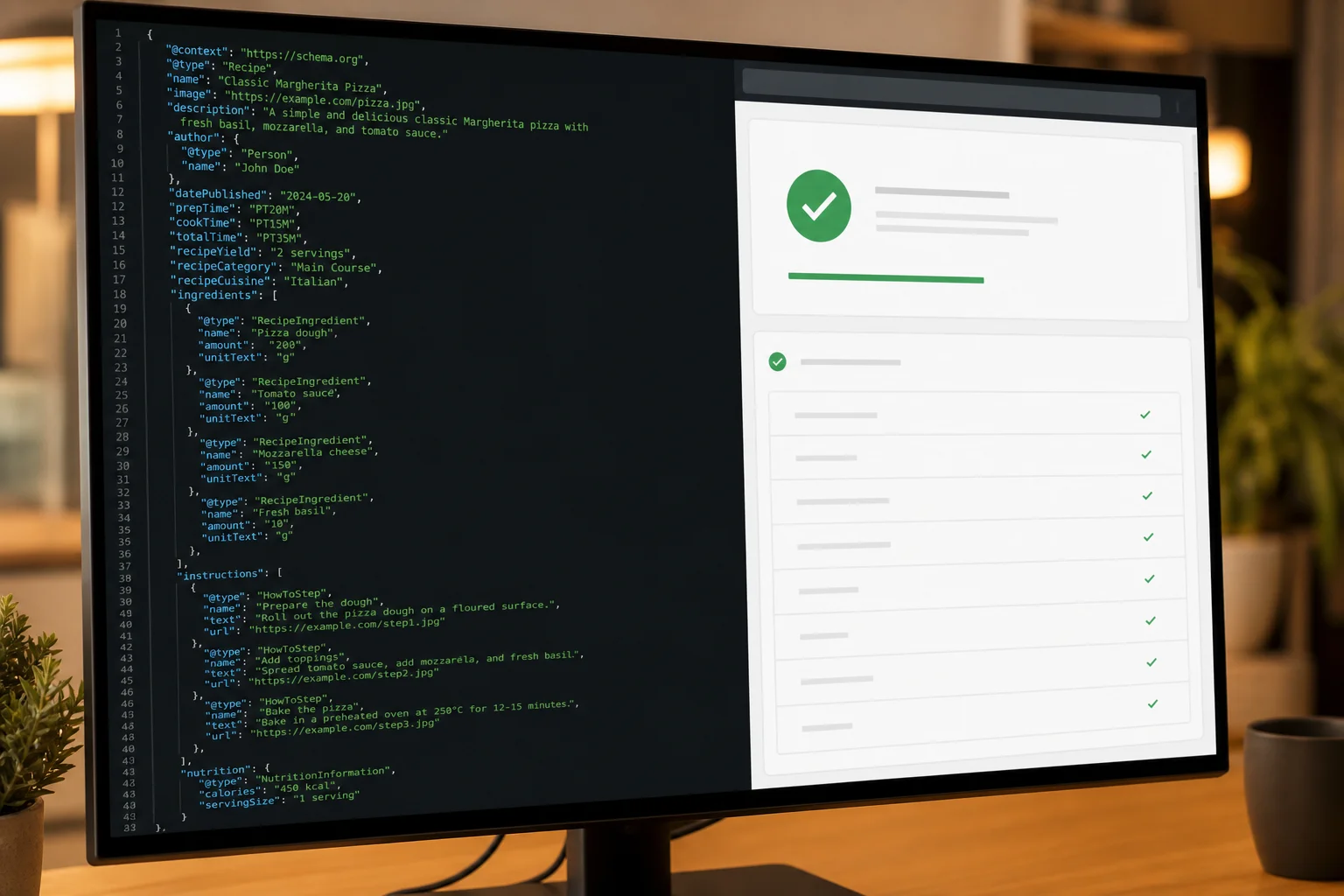
How Search Engines and AI Systems Extract Structured Data
When Google Bing and other search engines crawl your site, they run two passes on most pages. The first is the standard text crawl. The second extracts any JSON-LD, Microdata, or RDFa from the page and feeds it into the knowledge graph.
The Google Rich Results Test confirms what was successfully parsed. If your schema markup has errors, those fields are silently dropped. That means your site can look fine to a human visitor and still be invisible to the structured data extraction layer that feeds AI answers.
For AI Overviews, structured data functions as a confidence signal. A page with valid, complete LocalBusiness schema combined with strong organic signals is treated as a more authoritative source for location-specific answers than an identical page without it. Bing's Webmaster Guidelines explicitly state that structured data helps Bing understand the context of web pages, and that understanding feeds directly into how Bing Copilot answers service and location queries.
AI systems at Google Bing are not reading your site the way a human does. They are pattern-matching against structured signals. The more clearly you label your content with schema markup, the less inferential work they have to do, and the more likely they are to pull your business as a citation in search results.
What Incomplete Schema Markup Is Costing Arizona Businesses
Most Arizona service businesses fall into one of three categories when we audit their structured data. First, no schema at all, meaning AI systems are guessing at your business facts from unstructured text. Second, outdated schema with wrong hours, old phone numbers, or discontinued services listed, which actively undermines trust. Third, schema that was configured once and never validated, so errors from a site redesign have been silently dropping fields for months.
The third scenario is the hardest to catch. If you ran the Google Rich Results Test on your homepage today and saw errors, your site has been losing structured data credit since those errors first appeared. AI systems do not send warnings. They stop citing you.
This is why we validate and maintain schema as part of our generative engine optimization process. AI visibility is not a bonus feature for our clients. It is a baseline expectation we build into every engagement from day one.
For businesses investing in both organic and off-page signals, structured data works alongside link building services to build the overall authority AI systems look for when choosing who to cite in search results.
Frequently Asked Questions
Does schema markup directly affect Google rankings?
Schema markup is not a confirmed direct ranking factor in Google's traditional algorithm. It improves eligibility for rich snippets and rich results in standard search results, and it functions as a citation-readiness signal in AI search. Businesses with complete, valid structured data are more likely to appear in AI Overviews for service-plus-location queries, which drives real traffic even without a change in traditional rankings.
Which schema types should a local service business prioritize first?
Start with LocalBusiness or the appropriate subtype for your industry, then add Service schema to individual service pages. These two schema types establish your entity identity and service scope, the two things AI systems need most before they cite you for local queries. FAQPage and AggregateRating come next. Use schema consistently across all key pages, not just the homepage.
How do I validate that my schema markup is working?
The Google Rich Results Test is the primary validation tool. Enter your page URL and it shows which schema types were detected, which fields were populated, and which errors exist. Google Search Console also shows an Enhancements report where you can track rich results eligibility over time. For AI search visibility, monitor whether your business appears in AI Overviews for service-plus-city queries in your market.
Does schema help with AI search platforms beyond Google?
Yes. Google Bing and emerging AI platforms all process Schema.org markup. Bing Copilot uses structured data to answer service and location queries. AI systems that index and read web pages consume JSON-LD and return more confident answers when markup is clean and complete. Using schema.org for AI search improves your signal quality across every system that reads structured data, not just Google.
What fields do most businesses forget to add to their schema?
The most commonly missing fields in our audits are areaServed, openingHoursSpecification, priceRange, and sameAs. These are the exact fields AI systems use to verify business details against external sources. Without them, your schema tells search engines you exist but does not give them enough to build a confident citation in AI Overviews or rich results.
Get a Schema Audit and Start Showing Up in AI Search
Schema.org for AI search is not something you configure once and forget. It needs validation after every site update, expansion as your service pages grow, and ongoing alignment with how Google Bing evolve their structured data requirements. If you want to know exactly where your structured data stands today, start with our free consultation and we will pull a complete schema audit in the first meeting.
Want us to do this for you?
Brotherly SEO builds and runs the strategy described here for service businesses across the country.
Book a free consultation